dieselenthusiast wrote:
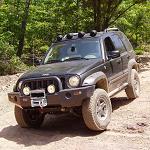
Every Car Audio enthusiast knows that it takes dual batteries to get the power you need. 2-3 amplifiers continually sucking juice is hard on the alternator and single battery. Batteries get very hot when stressed. Consider how many off-road lights you have, the power each light needs, the duration you might use them, and factor in other power uses such as a winch and other accessories. Compile this information into some type of formula that provides you with an idea if an extra battery is needed. Upgrading to a bigger alternator is part of the negotiation, but there is no doubt that one battery is going to feel the stress. If your interior lights and/or off-road lights are dimming, that might be one sign that you need more juice. The Optima technical Representative told me that extreme heat is much more stressful on a battery than cold temperatures. The Jeep in my above Post was an example of over working the battery until it got so hot it wasn’t able to hold a charge. Ultimately the battery failed and we had to leave it stranded and come back two weeks later to retrieve it when the roads were permissible. Having the dual battery setup for emergency would have been nice in that current scenario. But having it wired for dual usage would have been convenient as well. There are thousands of cars/SUVs/Trucks out there who are running dual batteries for their car audio setup and aren’t having problems. My recommendation is to either go to a reputable Off-Road or Car Audio Shop and ask what types of aftermarket Alternators are being used and what appropriate electrical design is best used for your setup. If I have time I will call Optima and ask them. Most guys that I’ve seen with dual batteries are using Optima.
I am a car audio enthusiast. I've designed & built several systems, many times with the help of an electrical engineer or two. Competitors use dual batteries for competition purposes. Many tournaments are held indoors, where running the engine is not allowed, so they can't use the alternator. The way to compensate for the occasional transient peak is with a capacitor, not 2 batteries. Batteries are not over-stressed when they are part of a well designed electrical system that includes a properly sized alternator. The proper way to design that system is to first consider the alternator's capacity in amps, & how many amps are used by the equipment the vehicle requires to run. Then you have the left over for use. If you have installed equipment that exceeds that, you shouldn't run everything at once! If you are winching, turn off 5 of your lights, or all of them & have your buddy light the scene from his rig. Using a bigger battery, or two batteries to compensate for an overloaded system is not the proper way to approach this, & it can cause problems. Note that I am saying that abusing the system will cause problems, I am not saying that a properly installed dual battery system will cause problems. I've said that unless you are a car audio competitor, or you use the rig's electrical system a lot without the engine running, it is a waste of money to install 2 batteries.
If you are relying on the battery to compensate, THAT is when you are stressing the battery. How do you not stress the battery? By using a properly sized alternator, or adjusting the electrical load demand to stay within the parameters of the alternator.
By the way, I admire you & your friends for risking your own safety to help others in need. The world needs more people like that!

 Login
Login Register
 FAQ
FAQ Search






 Unless you are a car audio enthusiast who competes, or you are leaving your high-power lights on for an extended period of time with the engine off, the two battery set up is a waste of money! If you just HAVE to get rid of hundreds of dollars, there are many people in 3rd world countries dying because they don't have clean drinking water. Find a charity that can actually do something USEFUL with the cash!



 I thought in Car Audio both batteries are directly wired to the alternator in series. Maybe I’m confused! How would you wire a dual battery for an emergency battery backup? I’ve seen people mount an extra battery for a winch. I’m assuming they built in a switch to pull from a deep cycle battery, yet able to trickle charge from the alternator. Is this the emergency battery that you are talking about?