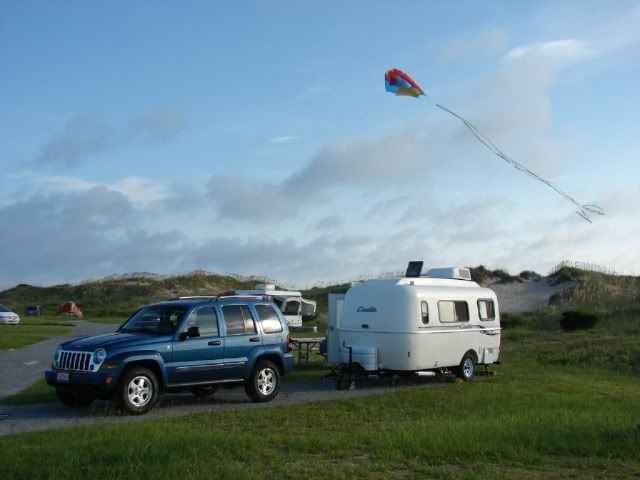
OP here. First, I had this problem (no start at >9,000 ft elevation with very low temps <10F) before I flashed the GDE Eco tune, so I doubt that's the issue. It has never left me stranded, but it takes 15-20 mins of start attempts before it will just barely start. I have tried experimenting with double key-ons, but it makes no difference. Once it does start, it produces thick, black smoke and runs poorly until I drive slowly (feathering the accelerator pedal) for a while.
My goal here is to get it to start on the first or second crank. I would expect it to be a bit rough at first at that low of a temperature and I'd be OK with that. I'd rather not install an intake air heater or carry a generator, etc. It seems reasonable to me that it should start in these conditions.
I have some new readings from my OBD2 reader after leaving it parked outside overnight:
Intake Air Temperature 42.8F (actual ambient temperature 29F)
Coolant Temperature 38 (actual coolant temp was the same)
According to the manual (page 1605), air intake temperature is monitored by the MAP sensor. Is it possible that the air temp in the intake manifold was still that warm after sitting overnight, or should I replace it?
The other thing that seems logical to look at is how the CRD monitors barometric pressure (BP) to calculate altitude since it starts fine at home (~5,500 ft). From the 2005 manual at
http://colorado4wheel.com/manuals/Jeep/KJ/Page 294:
Quote:
The ECM also incorporates the barometric pressure sensor in it’s housing
Page 1560 (gas engine)
Quote:
At key-on, the PCM powers up and looks at MAP voltage, and based upon the voltage it sees, it knows the current barometric pressure (relative to altitude).
And, most interestingly, (from that same page):
Quote:
As the altitude increases, the air becomes thinner (less oxygen). If a vehicle is started and driven to a very different altitude than where it was at key-on, the barometric pressure needs to be updated. Any time the PCM sees Wide Open Throttle (WOT), based upon Throttle Position Sensor (TPS) angle and RPM, it will update barometric pressure in the MAP memory cell. With periodic updates, the PCM can make its calculations more effectively.
Questions:
Are there really 2 BP sensors in Libertys (ECM and MAP)? If so, how is the one in the ECM used? I couldn't find any mention of the ECM one other than page 294.
Does the CRD's PCM also use the MAP to determine BP? It doesn't talk about that in the diesel sections of the manual at all, so I'm not sure.
CRDs don't have a throttle valve, so there's no way to measure a WOT. How (if at all) do they calculate altitude?
 Login
 Register
 FAQ
 Search