| LOST JEEPS http://www.lostjeeps.com/forum/phpBB3/ |
|
| Provent sump drain-back locations http://www.lostjeeps.com/forum/phpBB3/viewtopic.php?f=5&t=52255 |
Page 1 of 1 |
| Author: | dgeist [ Tue Apr 27, 2010 9:31 pm ] |
| Post subject: | Provent sump drain-back locations |
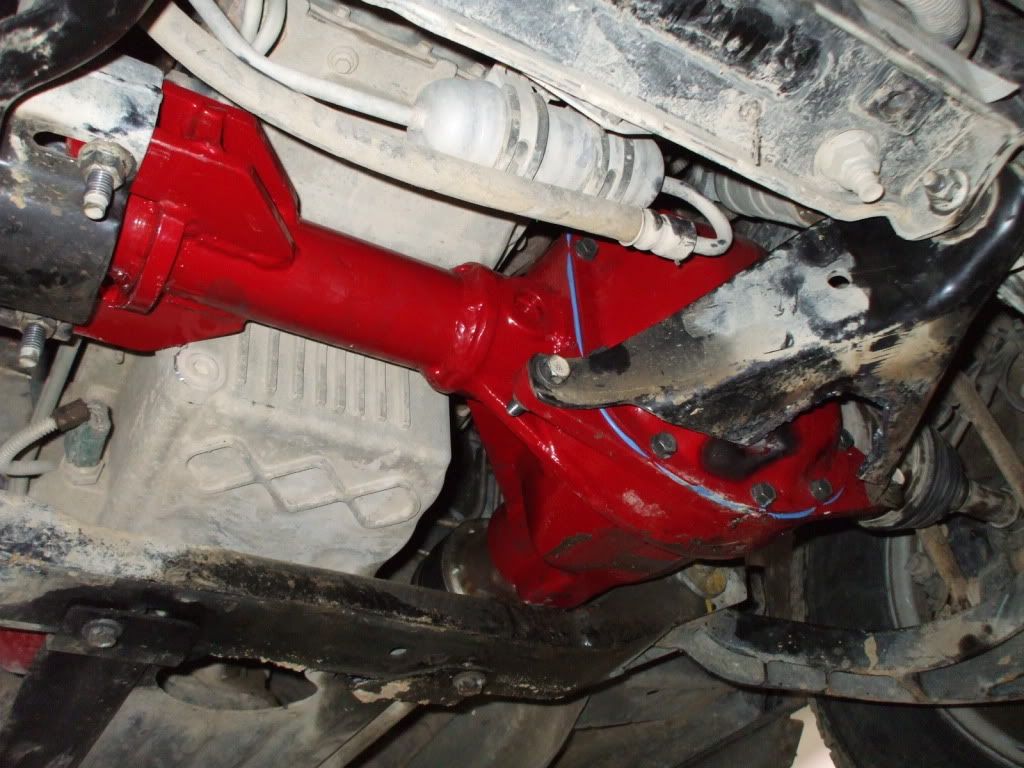
So, I'm thinking about re-plumbing the drain on my provent so it goes back into the oil sump. Some folks have tapped the block or used the oil drain from the turbo, but I was thinking of using one of the ports here: ![]() (shamelessly taken from the steel front diff thread). The front port in the pan near the diff carrier has nothing in it and could probably be used easily if the right fittings are in place. The other one has a sensor (oil pressure or temperature I'm guessing) and would be just as good a place to use physically, but I'd like to avoid messing with sensor mounting if possible (asking for trouble and so forth). So, does anyone have any ideas on how (specifically) to extend the sump upwards from that point safely so it can be attached to the drain from a provent near the turbo vacuum actuator? I was thinking some brass elbows to get it away from the suspension and then perhaps some hard brake line bent to extend the level upward. What kind of valve would I put in there to ensure one-way flow and how far up would I need to extend the sump in order to ensure it drains properly at rest? Dan |
|
| Author: | warp2diesel [ Tue Apr 27, 2010 9:40 pm ] |
| Post subject: | Re: Provent sump drain-back locations |
Based upon the oil filter location on older VM 2.5L engines, I suspect that is an oil pressure port that routes oil to the oil filter. For my Centrifuge, I tapped a hole in the pan and used a conduit nut and lots of JB Weld to reinforce the point. Please, pull the plug and let us know, if I am wrong, I will admit it. |
|
| Author: | WolverineFW [ Tue Apr 27, 2010 10:34 pm ] |
| Post subject: | Re: Provent sump drain-back locations |
dgeist wrote: So, does anyone have any ideas on how (specifically) to extend the sump upwards from that point safely so it can be attached to the drain from a provent near the turbo vacuum actuator? I was thinking some brass elbows to get it away from the suspension and then perhaps some hard brake line bent to extend the level upward. You could use some stainless steel braided hose if you want to spend the money. dgeist wrote: What kind of valve would I put in there to ensure one-way flow and how far up would I need to extend the sump in order to ensure it drains properly at rest? Dan One way flow requires a check valve. |
|
| Author: | dgeist [ Tue Apr 27, 2010 11:32 pm ] |
| Post subject: | Re: Provent sump drain-back locations |
warp2diesel wrote: Based upon the oil filter location on older VM 2.5L engines, I suspect that is an oil pressure port that routes oil to the oil filter. For my Centrifuge, I tapped a hole in the pan and used a conduit nut and lots of JB Weld to reinforce the point. Please, pull the plug and let us know, if I am wrong, I will admit it. So, does that mean that the unused port is on the "dirty" side and that it would drain into the sump? Hopefully so. I just checked the provent literature and they recommend a minimum column of 35 cm over either a check valve (if the outlet is above the sump) or the oil level, so I guess I could plumb it with or without the check valve if that port is used. "With the valve" would be nice since I could use softer material above it to route to the provent. Any guesses on what the plug's size and threads might be? Similar to the drain plug? Dan |
|
| Author: | Glend [ Wed Apr 28, 2010 8:28 am ] |
| Post subject: | Re: Provent sump drain-back locations |
There is a percentage of water vapour condensed out in the Provent discharge, do you really want to put water back into your oil pan? |
|
| Author: | dgeist [ Wed Apr 28, 2010 10:08 am ] |
| Post subject: | Re: Provent sump drain-back locations |
Glend wrote: There is a percentage of water vapour condensed out in the Provent discharge, do you really want to put water back into your oil pan? Realistically, no I don't want that, but every installation I've seen documented other than that of VW TDIs and CRDs has the filter drain going to sump. I can't imagine that the entire industrial engine industry just forgot about that... I HAVE seen problems with the provent where the drain filled up pretty quick and caused backpressure in the CCV, making things leak (and hopefully nothing worse). I mostly want an automated draining system. If I have to put an inline hydrophobic filter or something, then that may be something that's reasonable to do, too. From what I've observed, the water volume in the provent drain is tiny. There are some other factors at play and I'd love to hear some feedback from those that know more about engines than I: - Oil floats, meaning the water will tend to sit at the bottom of the pan and below the oil intake of the filter. If there's only a tiny bit of water, does it make a difference? - Would a modern high-quality oil filter prevent water in the sump from getting into the clean side oil system? Dan |
|
| Author: | onthehunt [ Wed Apr 28, 2010 11:20 am ] |
| Post subject: | Re: Provent sump drain-back locations |
I think the majority of what drains out the provent is water. If you only take short trips with the jeep you might have a problem. When the engine is operated at normal temp it will evaporate. |
|
| Author: | warp2diesel [ Thu Apr 29, 2010 7:03 am ] |
| Post subject: | Re: Provent sump drain-back locations |
dgeist wrote: warp2diesel wrote: Based upon the oil filter location on older VM 2.5L engines, I suspect that is an oil pressure port that routes oil to the oil filter. For my Centrifuge, I tapped a hole in the pan and used a conduit nut and lots of JB Weld to reinforce the point. Please, pull the plug and let us know, if I am wrong, I will admit it. So, does that mean that the unused port is on the "dirty" side and that it would drain into the sump? Hopefully so. I just checked the provent literature and they recommend a minimum column of 35 cm over either a check valve (if the outlet is above the sump) or the oil level, so I guess I could plumb it with or without the check valve if that port is used. "With the valve" would be nice since I could use softer material above it to route to the provent. Any guesses on what the plug's size and threads might be? Similar to the drain plug? Dan Take another look on your oil pan with the skid plate off instead of looking at a pic from a vendors add. You will see a cast in oil passage way that goes from the plug up to the bottom of the engine block. Where you see the plug, the passage makes a 90 degree turn and then you can see the passageway that goes back to the oil filter. The hole in the pan is to either to drill the passageway or it is to support the core and after the pan is cast to clean the casting sand out of the oil passage way. VM is smart enough to not trust a press in plug that could pop out and dump oil under system oil pressure (30-70 PSI) onto the ground. The sensor near the oil filter is the oil pressure switch, this is where I Teed in my oil supply for my centrifuge. Some manufactures (like Caterpillar/ Perkins) put in spare plugs so they can adapt their engines to several applications from one base unit, VM drills and taps the holes for each application. |
|
| Author: | Mandela [ Thu Apr 29, 2010 8:31 am ] |
| Post subject: | Re: Provent sump drain-back locations |
dgeist wrote: warp2diesel wrote: Based upon the oil filter location on older VM 2.5L engines, I suspect that is an oil pressure port that routes oil to the oil filter. For my Centrifuge, I tapped a hole in the pan and used a conduit nut and lots of JB Weld to reinforce the point. Please, pull the plug and let us know, if I am wrong, I will admit it. So, does that mean that the unused port is on the "dirty" side and that it would drain into the sump? Hopefully so. I just checked the provent literature and they recommend a minimum column of 35 cm over either a check valve (if the outlet is above the sump) or the oil level, so I guess I could plumb it with or without the check valve if that port is used. "With the valve" would be nice since I could use softer material above it to route to the provent. Any guesses on what the plug's size and threads might be? Similar to the drain plug? Dan My understanding is that it is easier to tap the blowby back to the sump or use a one way valve if you want to exit the blowby through the exhaust if you're not running a cat or your cat is gutted. Some people will tell you that the unburnt diesel will ignite in your exhaust, that's not true. We don't like this method do we now as it sprays blowby onto the cars behind us especially a brand new white Lambo would really look good. |
|
| Author: | racertracer [ Thu Apr 29, 2010 9:57 am ] |
| Post subject: | Re: Provent sump drain-back locations |
I specifically look for white Lambos to test the system. If i look in my rear view mirror and I see dark oil spots on the white hood, then i know everything is working OK.
|
|
| Author: | warp2diesel [ Thu Apr 29, 2010 11:28 am ] |
| Post subject: | Re: Provent sump drain-back locations |
Weather you choose to tap into the block or pan, you won't need a fitting any larger than 1/4" NPT to drain a Provent. Slide a 3/8" hose onto a barbed fitting and you are good to go. I could have used a 3/4" NPT drain for my centrifuge, but I chose 1" NPT since I have a lot more oil coming out of a centrifuge (55 GPH Vs 3 oz per oil change). With the 2 1/8" restriction behind the cat opened up to 2 1/2" your back pressure will be zero except when you are doing a lot of stop and go driving and then punch it to the floor to enter an express way. Even then you will have 1/2 PSI for a few seconds until the cat burns up the goo on the catalyst, then it will drop to zero until you do the stop and go for a while. With all the Enviro Wackos in the EPA, I would be hesitant to plumb any oil drip into my exhaust. Send the oil back to the sump, the water will evaporate out of the oil as you drive and help a little to clean out any carbon build up in your cylinders as it gets sucked into the intake. |
|
| Author: | CATCRD [ Thu Apr 29, 2010 3:28 pm ] |
| Post subject: | Re: Provent sump drain-back locations |
Drain it into your front diff. Just kidding. Don't route it into your oil pan, it's a lot of work just to get nasty, water-contaminated oil in your sump. Just drain it by hand once in a while. |
|
| Author: | dgeist [ Thu Apr 29, 2010 5:03 pm ] |
| Post subject: | Re: Provent sump drain-back locations |
Mandela wrote: My understanding is that it is easier to tap the blowby back to the sump or use a one way valve if you want to exit the blowby through the exhaust if you're not running a cat or your cat is gutted. Some people will tell you that the unburnt diesel will ignite in your exhaust, that's not true. We don't like this method do we now as it sprays blowby onto the cars behind us especially a brand new white Lambo would really look good. It's not the blowby that I'm talking about. That's plumbed back to the factory location after being filtered. The output from the provent that would go to the sump is the condensate (mostly oil, but some contaminants and water as noted above). warp2diesel wrote: Take another look on your oil pan with the skid plate off instead of looking at a pic from a vendors add. You will see a cast in oil passage way that goes from the plug up to the bottom of the engine block. Where you see the plug, the passage makes a 90 degree turn and then you can see the passageway that goes back to the oil filter. The hole in the pan is to either to drill the passageway or it is to support the core and after the pan is cast to clean the casting sand out of the oil passage way. VM is smart enough to not trust a press in plug that could pop out and dump oil under system oil pressure (30-70 PSI) onto the ground. The sensor near the oil filter is the oil pressure switch, this is where I Teed in my oil supply for my centrifuge. Warp, pardon my re-use of another CRD owner's photos (yes, Marlin got them from a user, not the other way around) Since they showed exactly what I was trying to explain and I have neither a lift, or presently the time to go take off my skid just to take a photo so I can ask a question... I appreciate the insight and info above, but it's not completely clear since I've never seen the pan off the jeep and I'm not up on my oil passage design. Knowing what you do about the oil passage, is that plug covering a legitimate entrance to the sump that I can use or to something else that I cannot use? CATCRD wrote: Don't route it into your oil pan, it's a lot of work just to get nasty, water-contaminated oil in your sump. Just drain it by hand once in a while. I'm doing that now, and it's something I'm just considering revisiting since it's one more thing that I have to do regularly, clean up if it drips, etc. Constant re-evaluation of assumptions is all I'm doing. I may not plumb it back to the sump at all depending on the outcome of this thread. I'm just exploring the options. Dan |
|
| Author: | warp2diesel [ Thu Apr 29, 2010 6:29 pm ] |
| Post subject: | Re: Provent sump drain-back locations |
dgeist wrote: Warp, pardon my re-use of another CRD owner's photos (yes, Marlin got them from a user, not the other way around) Since they showed exactly what I was trying to explain and I have neither a lift, or presently the time to go take off my skid just to take a photo so I can ask a question... I appreciate the insight and info above, but it's not completely clear since I've never seen the pan off the jeep and I'm not up on my oil passage design. Knowing what you do about the oil passage, is that plug covering a legitimate entrance to the sump that I can use or to something else that I cannot use? Dan The oil pump draws the oil out of the inside of the pan and feeds it through the block passage way to the passage way in the oil pan casting and then back to the oil filter. From the oil filter, filtered oil flows to the innards of the engine. Think of the oil passage way in the pan as a concealed pipe carrying pressurized unfiltered oil to the oil filter. VM came up with an ingenious design to avoid the cost and trouble with external plumbing so they could put the oil filter at the rear of the engine, that is it. Pull the plug and connect it to your Provent, all of your engine oil will go into the bottom of your Provent under full oil system pressure and be blown into your turbo intake and out of the pressure vent on top. The plug is not a way to drain the oil into the sump. Sorry if I seamed a little flippant at first, I deal with Civil Engineers who can't understand why water runs down hill and have to explain the Laws of Physics well known by Plumbers. I considered using the plug as a pressurized oil source to connect to my centrifuge. But I suspect they use some weird thread and being able to connect to 1/8" NPT at the oil pressure switch and sending filtered oil to my centrifuge was too easy. If you decide to tap a hole in the side of your pan, you will need a right angle drill and a stubby 7/16" drill bit. Plan to do this when you change your oil so you can flush out any chips with Automotive Brake Cleaner. Pack the drill flutes with grease and drill slow and easy, clean out the chips in beaded in the grease and regrease the flutes. When you tap the 1/4" NPT pack the tap flutes with grease and when the grease in the flutes fill up with chips, wipe out the grease and regrease until you are done. Spray downward from the tapped hole into the oil pan with Automotive Brake Cleaner to flush out any chips you did not catch with the grease, if you do a good job, you will find no chips coming out of the pan drain plug. Clean the threads in the block with Automotive Brake Cleaner and let it dry. Select a hose that fits the bottom of your Provent and a barbed fitting that has 1/4" NPT male threads. Since Diesel Engines vibrate use JB WELD on the threads and screw the barbed fitting into the tapped hole. Connect the hose at both ends and you are done. |
|
| Author: | dgeist [ Thu Apr 29, 2010 8:52 pm ] |
| Post subject: | Re: Provent sump drain-back locations |
Thanks for the explanation. The "that passage is under pressure" was the info I was trying to figure out. Fluid seeking its own level in pipes obviously only works if one of the pipes doesn't have a pump pressurizing it. Is the turbo oil drainback fitting a feasible location for a tee (without having to tap a new hole in the block or oil pan...)? That would be a check-valve mandatory install, I'm guessing, since it's well above the oil level. I can understand what you mean about CEs. Anyone who has legitimate college classes with titles like "Dirt 1" and "Dirt 2" is likely a little off Dan |
|
| Author: | warp2diesel [ Thu Apr 29, 2010 10:05 pm ] |
| Post subject: | Re: Provent sump drain-back locations |
dgeist wrote: Thanks for the explanation. The "that passage is under pressure" was the info I was trying to figure out. Fluid seeking its own level in pipes obviously only works if one of the pipes doesn't have a pump pressurizing it. Is the turbo oil drainback fitting a feasible location for a tee (without having to tap a new hole in the block or oil pan...)? That would be a check-valve mandatory install, I'm guessing, since it's well above the oil level. I can understand what you mean about CEs. Anyone who has legitimate college classes with titles like "Dirt 1" and "Dirt 2" is likely a little off Dan I would not T into the Turbo drain even though you might get away with it. Any restriction on a turbo return can cause oil to be forced into the turbo inlet. Diesel turbos do not operate under vacuum and do not have true seals, just oil slingers that throw the oil away from the turbine shaft. Look at my post for my centrifuge for a safe location and drill and tap your pan, gravity is still free even though the various current regimes around the world (including D C and Ottawa, ON) are exploring a way to tax it. Since the CRD is not an aircraft application (yet) I would rely on gravity and hold off on the check valve. Putting a T in the Engine Dipstick tube may work, but I have not looked close enough to verify. My home made Oil Separator recovers about 3 0z every 6,000 miles, that amounts to 0.00023 gallons per hour of oil. If the Dipstick Tube is close enough to a SAE size to install a T with compression fittings, plus low enough on the block, it may work. Just remember what some CE PEs can't figure out, water (oil too), runs down hill. |
|
| Page 1 of 1 | All times are UTC - 5 hours [ DST ] |
| Powered by phpBB © 2000, 2002, 2005, 2007 phpBB Group http://www.phpbb.com/ |
|