thermorex wrote:
The way I did it when I replaced the PS hoses, I just added atf+4 to the PS bottle and started the engine and let it idle. Some of the fluid will go towards the pump anyways before you start, so it's not like you'll break anything by running the pump dry for 10-20 seconds at low, idle rpm. Just watch out the bottle since in about 30 seconds you'll need to add more fluid.
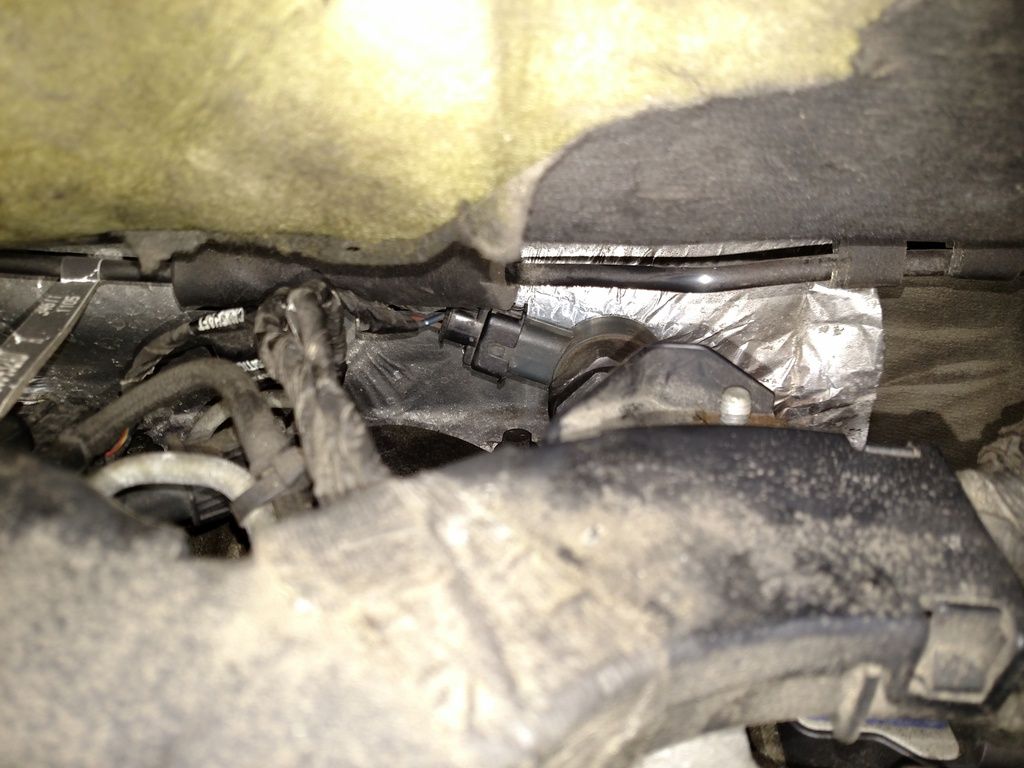
I believe the manual suggest to unplug the rail pressure valve connector to make sure the vehicle won't start, and you should crank for few seconds to allow the pump to prime. At least that's what I think. I just started the engine and let it idle, it will instantly suck new fluid...
And yes, PS hoses are a pain in the butt to replace...
It says you want to crank it to build pressure, but has "do not start" in all caps. The gasser on the other hand you just fill, go lock to lock a few times, then start ... I guess this is because the gasser PS pump has an integral reservoir? I'm tempted to just crank it a couple cranks with the starter and hope it doesn't start ... it's been sitting a long enough time that it might just not start easily at all, which will work in my favor. I also don't want to take the chance of ruining my pump after all this.
The whole FSM procedure:
PRE AIR EVACUATION PROCEDURE (1) Fill the pump fluid reservoir to the proper level and let the fluid settle for at least two minutes.
(2) Remove the fuel rail electrical connector (Fig. 4). (3) Crank the engine (DO NOT START) to pressurize the system. (4) Check fluid level. (5) Repeat steps #1 & #3). (6) Reconnect the fuel rail electrical connector (Fig. 4).
AIR EVACUATION AND FILL PROCEDURE (1) Fill the pump fluid reservoir to the proper level at the cold mark. (1) Tightly insert special tool 9688 onto the pump reservoir. (2) Apply 20–25 in HG (68–85 Kpa) of vacuum for a minimum of 3 minutes. (3) Remove the vacuum and special tool 9688 and add fluid to the proper level. (4) Repeat steps #2 thru # 4 until fluid level stabilizes. (5) Raise the vehicle so the front tires are off the ground. (6) With special tool 9688 installed onto the reservoir apply 20–25 in HG (68–85 Kpa) of vacuum, while cycling the steering wheel from lock to lock every 30 seconds for approximately 5 minutes.
NOTE: Do not hold the steering wheel on stops.
(7) Remove the vacuum and add fluid if necessary. (8) Start the engine and cycle the steering wheel from lock to lock every 30 seconds for approximately 5 minutes.

I do have the special tool, so if I can just do the first part with a few cranks, I should be able to follow the rest.

 Login
Login Register
 FAQ
FAQ Search


 Of course I can't get the fascia and grille to line up quite right but at least it drives.