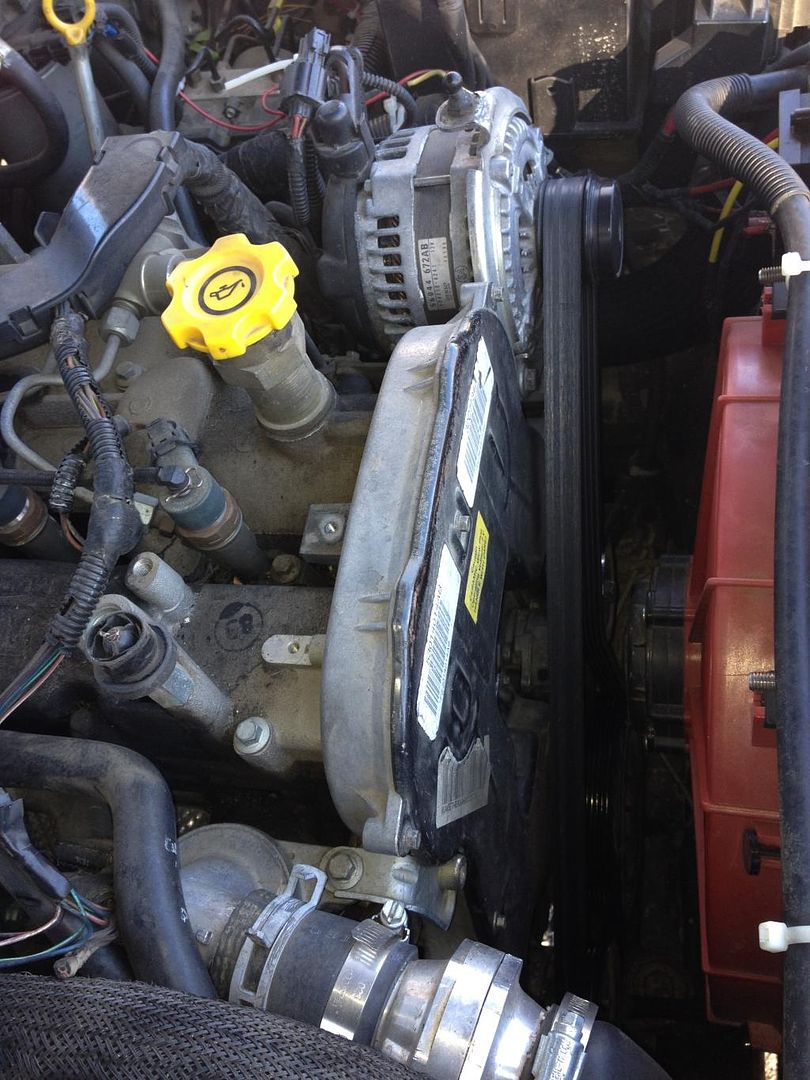
It's important that gauge responses are not delayed by anything other than the thermal inertia of the SS probe which is about 15 sec. This way you are only measuring the temp of flowing gases and not the "latent" heat or residual heat of a body of Cast Iron.
The fact that I'm measuring in deg C is a problem - the scale is quite a bit more compressed than the Farenheit scale although I grew up with the imperial scale and we changed to metric ----rude words - doubled the tools in the workshop.
This location is so indicative that a 10% increase in calculated engine load brought about by a slight hill or some acceleration almost always results in a 10% increase in EGT until it stabilises and then drops a little again. You'll like it tcoilburner.
I know that my engine run temp is within chosen limits and I allow a bit of extra time to let the heat run out of the turbo heat sink.
After being at 280 C it comes back to 250 C (gauge lowest reading) after a period of 15 sec. Any higher/hotter running and the whole engine takes significantly longer to cool down and start allowing cooler gases through.
That would be about the longest delay I note for readings to change but that is the thermal inertia of the SS sensor.
At home I've done a good run and then taken temps with a laser pointer to confirm carry-over time for dispersing heat away from the Turbo body as it cools....this is why I'm surprised some are so ready to switch off so soon.
The EGT drops much more slowly than folk realise in the body of the turbo as does the clearing of any carbon that can deposit itself on vital engine components. There is a certain amount of radiant heat from the body of the turbo despite the overall exhaust gas vector pulling it out of the engine. It should only be a passive component at idle and not acting as a compressor.
The importance of an appropriate idle down period cannot be overstated and I am troubled by those drivers who follow the table provided in the owners handbook.
I intentionally leave the accessories switched on to slow (extend) the "warm-down" - clears the cobwebs out and lets any residual carbon go out with the exhaust gasses (especially with the GDE tune). Exhaust gases are so clean they smell like a very clean unleaded gasser engine.
I don't idle her down in gear but leave the A/C on.
1300 F is the absolute upper limit I would let it go to ever and given the way it runs - well gee you'd have to be pushing darned hard to get it there and keep it there. I'd confirm that EGT Geordi noted as a sound basis for continuous running.
Just as an aside I finally set aside the time to sort out the In /Out temp gauge for the CAC cooler. Haven't been for a drive yet - but that's certainly better than reading the temps on my A/C condenser - where the thermistors sat until sorted

.
That will be interesting and I think very telling about the health of my CAC system.
I rarely run stop-go or true highway most of mine is done at 50 mph due to the local speed limit. Fairly constant style of running really with little traffic and that spongy original Torque converter. It will ease the pressure on the whole rig up ever so much when the replacement goes in. Just have to fabricate the scissor lift for it now.
[quote="tcoilburner"]I don't think mine would get down to 300f after the engine warms up. At idle cold engine it now is at 300-325f after a few minutes. Also after the engine is hot, if I allow it to cool down to 375, and just put it in gear no a/c, it heats back to 400-425 sitting still.[/quote]
That seems about normal behaviour and your already gaining the sensitivity of siting the thermocouple as you did.

 Login
Login Register
 FAQ
FAQ Search